
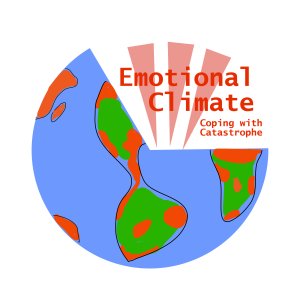
My weekly column in the daily Plymouth Herald (17.12.24), musing on memes. It is said that young people are now living in a 15-second information-age, although my current experience talking with students suggests quite the opposite. But to what extent the headlines are read and consumed instead of the analysis is up for debate. As ever, the unexpurgated version is below (minus the grammatical errors in the printed article…and, as ever, it’s not my headline…):
We’re Living in a Land of Social Media Memes
Every day we are assaulted, jolted, confounded or simply amused by the memes appearing across our social media.
A phrase, often printed in front of a provocative picture, is posted online to capture, sum-up and sloganise, seeking to impregnate our minds with a dominant thought of the day. No reason to read the contents, just scan a headline and move on.
We are being bombarded with what we are supposed to think, and consequently become hyper-critical of others in order to hide our own insecurities. The Blame Game, Trolling, Gaslighting, anti-bullying-Bullying and the nonsense non sequitur have become common discourse.
The best memes evoke an emotional reaction by which they’re judged and then shared towards the much-prized accolade of “viral”. Indeed, their creation has inspired a cottage industry, thousands of times larger than that initiated by the Spinning Jenny, producing home-spun phrases or sayings.
What used to be jokes have now been weaponised into ideologically-charged phrases to be liked or to cause anger.
On TikTok and Instagram memes are politicised to win hearts and minds, celebrities of the Right and the Left vying for the punchline quip or deathly allegation that will be shared ten million times. The picture propaganda lasts longer on X and Facebook, and now Bluesky, and tend to come round again, for months or sometimes years, thoroughly out of context from their original intention.
Categories follow news themes. Recent memes include “Care homes charging £5,000 a week – you could get a room at the Ritz for that! Nationalise social care!” Not funny really. A similar one with a picture of Bugs Bunny in a dress suit reads “I wish all CEOs a very healthy fear of the working class.” Yep!
Another, “Health Care should not be cheap and accessible. It should be free and universal”, ran across all apps. A favourite, mocking a TV advert of an elderly man on the phone searching for a specific book reads, “I’m looking for a copy of “How to Avoid Paying Tax by Buying a Farm” by J R Clarkson.”
There are left-wing memes and far-right memes and feminist memes and misogynist memes. There are also a growing percentage of memes created by artificial intelligence and shared by bots at a rate devised to swamp the internet.
Elon Musk, US-based multi-billionaire owner of X, is posting memes calling for a UK General Election, calling our society a Stalinist regime and authoritarian police state, and offering support for the jailed fascist Stephen Yaxley-Lennon, aka Tommy Robinson. The aim is to pull the elected UK Government rightwards into ultra-nationalist and racist policies to appease the opposition. It appears to be working.
When Musk bought X he “unbanned” far-right misogynistic and racist groups, allowing the posts and memes that labelled all asylum seekers as child abusers and sparked the anti-immigrant riots last summer. He bears some responsibility for all those provoked into violence and later jailed for exemplary prison terms.
It’s not just the Billionaire media-owners seeking political influence online. Apparently all States across the world are applying meme tools in order to cajole and confuse enemies both within and outside their national borders. Similar strategies, tho’ on a much smaller scale, were adopted during wars where planes distributed thousands of flyers saying “surrender now or die!”.
Conversely, some of us attempt to stay with facts and truths. For example, the dictionary definition of “genocide” has been shared in thousands of different memes, many with harrowing pictures of dead children and civilians, as a counter to much of the mainstream news coverage of Gaza. As fast as the online moderator can delete them as “contrary to our community standards’, another appears, illustrating the tens of thousands dead in Palestine and Lebanon.
The question is begged. Who is best placed to censor these ten-second messages, and in whose interests? Surely not the billionaire social media moguls least representative of the majority of working people. State censorship is a reaction to widespread opposition. Free the Meme!
The best this morning, given the very clear and present danger of climate chaos facing us all, is the picture of thousands of people labelled as “scientists”, being challenged by a single man saying “you are all wrong”. His label? “A man who saw a You Tube Video”.
 Emotional Climate