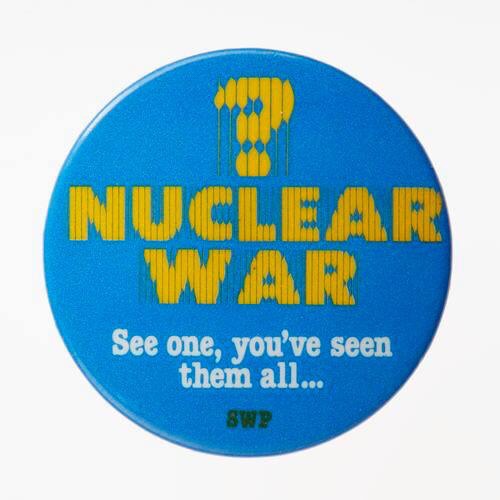
Looking back at centuries of warfare across Europe and, indeed, the World, the question is bigger, can there be a commonality between all people? Can we unite? We have experienced five or six thousand years of class society. Layers of social strata measured by individual access to the essential ingredients for sustaining life: food, warmth, shelter, safety, companionship (if not Love). Ever since the production of a surplus we have been separated by social class, private ownership and the associated power to control the masses.
The lottery of birth based upon DNA kinship and early years survival rates, geography, ecology and climate meld together to determine our life chances and longevity. Spreading over us all, like a quilt cover on a cold morning, has been the handed-down culture of our Clan. Recognising the matrix of birthrights and birth rites requires acknowledgment, from whichever ethnicity or creed we are part of, that we are born into societies where some people have more than others. More access to the means to survive and prosper, to learn and grow.
Protestant Christians may insist this state of affairs to be their God’s Will and that we should accept our place in the scheme of things, but Marxists would condemn all inequality and the injustices that flow from Birth privileges: exploitation, oppression, enslavement and incarceration. Oh, and for good measure, inherited wealth. All humans should be born equal. Importantly, social class relations are human-made and can therefore be dismantled by humanity.
In my naivety I have never fully understood how people put-up with the class relations that I’ve lived through, let alone the far worse injustices of peasant, agrarian or newly-industrialising societies. The common feature of all permutations of class society has been the absolute violence of the ruling elite in putting-down and administering pain against all and any who challenge their power and privilege. If ideas are generated that may challenge the status quo they will use Church and State to damn the dissidents. Ideas matter.
Civil war, not just inter-clan war, is the common experience of class society. Civil war usually goes hand-in-hand with nation-on-nation warfare. Crucially, war requires those waging it to conscript many others to their Cause. On the Eve of the 100th commemoration day of the Armistice that ended the First World War, the example of millions of people born with little or nothing, placed on two sides of an imaginary contour to stab, dismember, explode or maim their peers across the way, offers a singular imagery for exploring class society.
That war was waged between a few families (mostly interrelated) of the super-rich. There was a “band of warring brothers” impatient with each other’s counter claims on their birthright inheritance of land, wealth, power and peoples, ready to unleash material hell on tens of millions of fellow humans. In one sense it was down to who owns land where oil could be sucked up from below. In another, it was the pure avarice of people born and raised to believe they had a God given right to do whatever they wished with anything and anyone in the material world.
At the bottom end of the stratified society of each arbitrarily drawn “Nation State” of Europe and Russia, those born into slums, devoid of proper nutrition, sanitation, fresh water, warmth, opportunity or longevity, were told by their “betters” to go to war. And they did. Yes, the Rich sent their sons too, such was the power of the propaganda. But the rich, the very wealthy and even the tiny strata of aspiring middle classes had reason to go to war, at least in the hope of picking up the spoils of victory – Wealth and Power.
The poor and the working of the working classes had nothing to gain. Just more misery.
Contemporary political discourse insists that the working class gained materially from the plundering, pillaging, raping and genocide of Britain’s military against people’s of the East, the South, Asia and Arabia. But such analysis only compares like-with-like, not what could have been. Had there been no war, had instead the Great Unrest of 1912-14 – where workers joined together and rose like lions against the tyranny of Capitalist exploitation and poverty – won through, a very different world would have been created, based upon equality, peaceful and just trade and common wealth.
When standing in silence to commemorate the war dead, today’s Establishment will be sure to hide the fact, the Truth, that the First World War ended because of working class revolution. The rich and powerful families of Europe, self-proclaimed as divine Monarchy, did not complete their battles. Neither side won nor lost, hence the second world imperialist war was rekindled in 1939. Revolution, spreading from Russia to Germany and even Britain from 1917 saw army conscripts rebel against not only their captains and generals but the ideology of the war. Revolution stopped the War.
The scales fell from the eyes of those rotting in blooded mudbath trenches, threatened with either death for mutiny or death from battle, led by plum-tongued autocrats exuding class privilege and absolutist power. There was no justice, no benefit, no reason for the working man to shoot other working men of another Nation State, itself a contrived set of arbitrary boundaries determined by the power and avarice of it’s self-serving rulers.
In 1917, we, workers of the World, joined together and rose up against our common international enemy. Capital. That tiny class of avaricious humans set upon accumulating ever-increasing private wealth and power from the eternal immiserisation of the masses.
We fought the revolution for Peace, Bread and Land. Ideas of freedom, fraternity and sorority, emancipation, equality and self-determination. Class war spread and continued throughout the 1920’s. Fourteen imperialist armies were needed to invade Russia, assisted by Western Capitalist-funded White Army counter-revolutionary armies from within to break, smash, slaughter and defeat the Russian Revolution. The revolutionary ideas as well as social organisation across the world were ruthlessly crushed by the 1930’s.
Private-not-public health services ensured that millions would die from pestilence and influenza through the ‘20’s – more than ever died in the First World War. And speculative greed of the Rich on the scale of the 2008 banking crisis ensured the Crash of ‘29 and the destitution of the many as a prelude to renewed conscription in ‘39.
Despite the ghastly poverty of the 20’s and 30’s – lending a lie to the notion of western workers benefiting from the bosses plunder of resources from the Global South – workers were once again prepared to go to War for their Bosses. The lessons of the First World War appeared ignored or forgotten. Well, not quite.
The class-based Battle of Ideas was once again vital to war preparations. On our side, workers crossed national barriers to join in the fight against fascism across Southern Europe, seeking to protect democracy and any semblance of workers rights. Bosses, scared of workers power, were happy to allow totalitarian thugs to take control of their State machine in order to protect and even enhance Capitalist exploitation.
By the mid-thirties the arguments were well advanced inside the Ruling Class – the majority of the British Royal family sided with their cousins in Germany in supporting the power of the Nazis – Hitler’s fascist Party – in waging war to quell the power of the working class.
Many German workers were bribed and fooled by hopes of the end of Austerity and a new and peaceful millennia. The groups of German workers who fought against fascism were divided and crushed. The British working class weren’t about to give-up what little democracy they had fought and died for in order to return to totalitarian barbarism. They knew their bosses wanted to plunder, using the sacrifice of the workers to win new territories, natural resources and oil, but at the same time knew that a defeat at the hands of the Nazis would mean even worse servitude.
We had no choice but to sign-up once again. This time not for the absurd notions of patriotism, xenophobia and nationalism that had broken working class resistance in 1914. No, this time we died in our millions for ideas of Freedom and Social Justice. We also recognised the lies and propaganda of pretend-democrats. By 1944 the mutinies against the genocidal orders of the ruling class generals had begun again across the armies of both sides. In Britain, the Etonian senior Tory MP, Quintin Hogg, warned in 1943, ‘If you don’t give the people social reform, they will give you social revolution.’
For a while the ruling class acceded to offering limited reforms – a limited National Health Service, affordable democratically owned and managed council housing, nationalised utilities offering water so cheap it could not be charged for, and towards full-employment. By the 1970’s the international Boss Class had reunited, more or less, to complain amongst themselves that their profit rates were declining whilst the common wealth of the people was improving. This signalled creeping socialism, not competitive Capitalism. Something had to be done. They clawed the reforms back, finding a myriad of ways to extract the cash from the Tax Purse back into their private pockets. Legislation for privatisation and Austerity was imposed by their brothers in the State machinery to demand total freedom for competition and accumulation – a Free Market.
The far-right economics of Neoliberalism was perpetrated not through outright warfare but slight-of-hand propaganda, identified as Glasdnost in Eastern Europe and Russia, and the equivalent “opening-up” of “equal opportunities, a reduction of formal oppression, in the West. The price of such Freedom would be “Perestroika”, restructuring the State and the economy to dismantle the social safeguards and infrastructure that regulated and restricted exploitation and private accumulation of wealth.
So here we are in UK 2019: the return of rickets, schools scrabbling for books; millions in homes unfit for human habitation and overcharged by exploitative private landlords; a re-privatising NHS unable to manage the demands of a working class made sick by poverty and unsafe working practices; the exclusion, persecution and scapegoating of people of non-white skins and minority cultures; the rehabilitation of commonplace domestic abuse. Exploitation and poverty on levels not seen since the 1930’s.
So why aren’t we all joined together in common revolt against the very obvious, and historically informed, injustice and inequalities of 2019? Well, the Ruling Class are trying to use nationalism, xenophobia, sexism, racism and religion to once again bind us to their side and their ideology of privilege, power-and-control. The current rage at their Austerity exploitation is as an open revolt in many countries, and seething and bubbling inside the working classes across Britain. Should we appear to be getting seriously organised against the Ruling Class, as we were in 1912-13, 1917-19, 1926, 1936-8, 1943-46, 1973-4 , 1982-4, 1997-2001, 2011-13, they will revert to their absolute power-tool of open warfare both home and abroad.
There is no understanding of today’s world without an understanding of the history that made it. As Karl Marx observed, the history of all hitherto existing societies is the history of class struggle. We cannot talk or dream of a better tomorrow without learning the lessons of what came before. And it is impossible to look at our society without recognising that the benefit and indeed survival of one class is entirely determined by the detriment and sacrifice of the other.
The interests of the Capitalist Class, the owners of natural resources and all production, are diametrically opposed to the interests of those who toil in their offices and factories to turn those natural resources into the products they design in order to extract the maximum in profits. They wage a class war against us daily, sometimes cleverly but often through sheer brute force.
There is a continuous battle of beliefs and ideology. The class struggle includes the battle of ideas. Working class consciousness has to become clear and collective once again. We have to finally understand that we must unite as a Class, bury our false divisions in order to fight for our children and grandchildren, take over the means of production for need not profit, sustainability not climate collapse, and wage Revolution.
http://www.mediafire.com/file/xlyy91r9arr46sn/wwi.devon.bbc.mp4/file
(Strikes in the First World War in Devon)